Feel free to email the York office anytime.
We're happy to help with any queries you have.
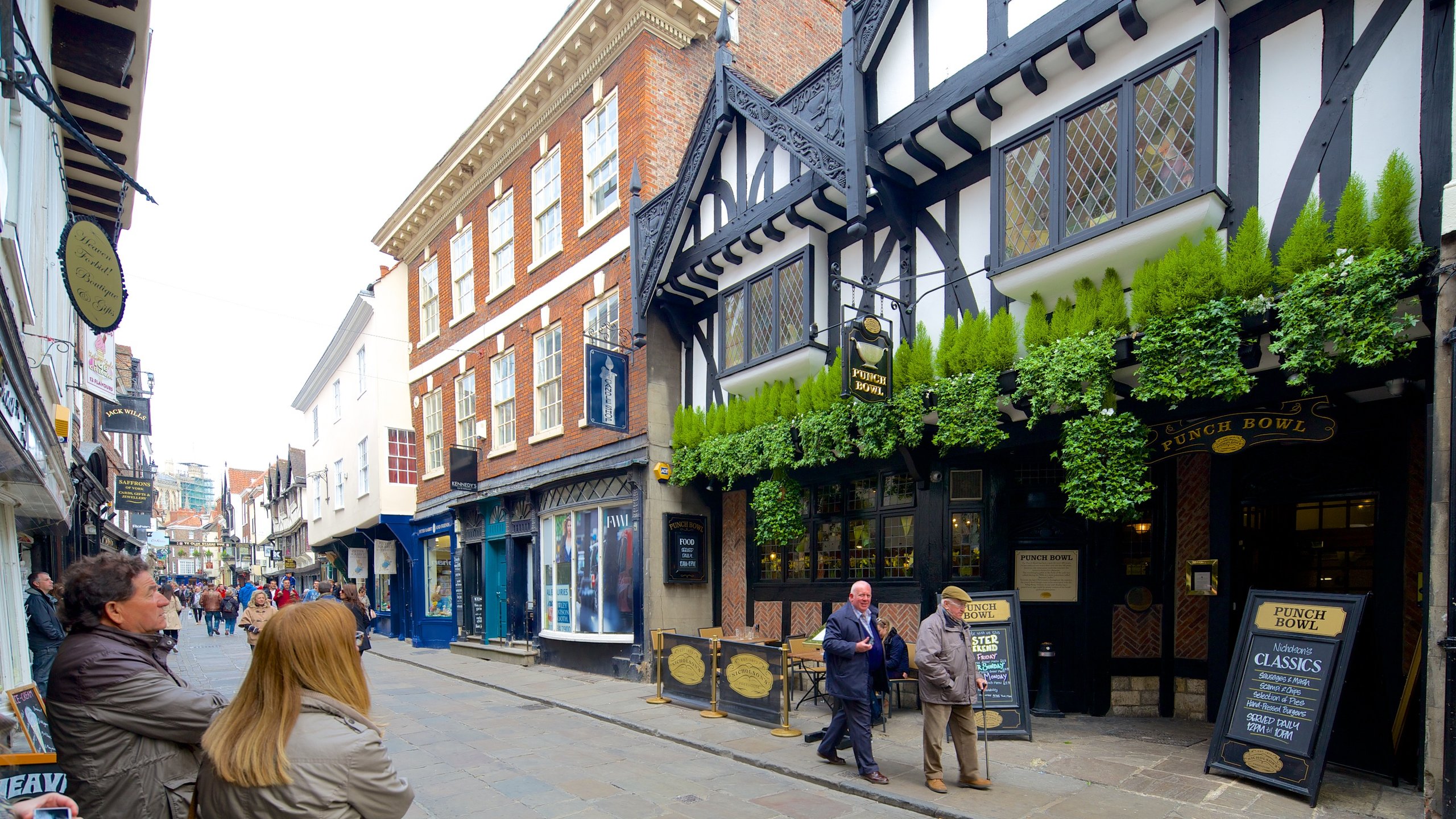
Most cities wear their history as decoration. York wears it as structure. The Roman walls that ring the city centre are still walked daily. The medieval street plan — the narrow Shambles, the snickleways, the Minster rising above everything — was not preserved in aspic but simply never abandoned. York is not a theme park version of the past; it is a city that has been continuously inhabited for almost two thousand years, and the past keeps surfacing through the present in ways that refuse to be merely picturesque.
The Romans founded Eboracum as a military fortress in 71 AD, and for two centuries it served as the administrative capital of Roman Britain. In 306 AD, Constantine the Great was proclaimed Emperor here — not in Rome, not in Constantinople, but in a city that the Romans called Eboracum and that would eventually become York. Few British cities can point to a moment of such world-historical consequence happening on their streets. The York Minster stands close to where the Roman headquarters building once stood; the column from that building is still visible in the Minster's south transept, left deliberately exposed.
In the medieval period, York was one of England's wealthiest cities, the northern capital in all but official name. The Merchant Adventurers' Hall, built in the 1350s and still used for events today, is one of the finest surviving medieval guildhalls in Europe. The wool trade that financed it made York's merchants extraordinarily powerful; the undercroft where their accounts were kept and their goods stored is among the most atmospheric medieval interiors in Britain. Prosperity left evidence here — and that evidence is still functional.
In the 1840s, York became a major railway junction, and the city's fortunes shifted again. George Hudson — the "Railway King" — was York's most famous Victorian promoter, whose speculation financed much of the railway expansion before his fraudulent practices caught up with him. The legacy he left behind was less moral but more durable than the man himself: York station (1877), with its magnificent curved roof, remains one of the finest Victorian railway stations in the country.
The same railways that connected York to the national network allowed its confectionery trade to flourish. The Rowntree's and Terry's companies between them made York one of the most significant chocolate-producing cities in the world through the nineteenth and twentieth centuries. Rowntree's gave us Kit Kat, Smarties, and Polo mints; Terry's gave us the Chocolate Orange. Both companies were Quaker foundations whose approach to business included housing, welfare provision, and profit-sharing for workers — an early model of what would later be called corporate social responsibility.
Seebohm Rowntree — son of Joseph, heir to the chocolate company — might be the most consequential social researcher ever to have worked in a single city. In 1899, he conducted a systematic survey of poverty in York, documenting the actual living conditions of working-class families with a rigour that had not been applied to social questions before. His finding that 28% of the population of York lived in poverty, despite it being a relatively prosperous city, was a shock to mainstream opinion that contributed directly to the Liberal welfare reforms of 1906–14. His second and third surveys of York, in 1936 and 1950, tracked the effects of social policy over half a century. The welfare state that Britons now argue about was shaped in significant part by evidence gathered on the streets of this city.
The University of York, founded in 1963 in the wave of new universities built under Harold Wilson's government, has become a major research institution, regularly ranked among Britain's top twenty. The JORVIK Viking Centre — built over an actual excavated Viking street, opened in 1984 — drew over a million visitors in its first year and helped establish York's model of archaeology-as-tourism that other cities have since copied.
York is also, consistently, one of the most visited cities in Britain, which creates its own pressures: housing costs, crowds in the Shambles, the endless negotiation between a city that is lived in and a city that is looked at. That tension is the particular challenge of a place where history is not a department of the museum but a condition of the architecture.
The walls are still there. The Minster is still rising. The layers keep showing through.
Photo by Karl Moran on Unsplash