Feel free to email the Leeds office anytime.
We're happy to help with any queries you have.
Leeds has a habit of being first. First to industrialise wool on a commercial scale. First to open a Harvey Nichols store outside London. First to make a working-class reformer the conscience of Parliament. First, by some accounts, to put together a recorded piece of moving image. These firsts are not coincidences; they are the result of a city that has always been more interested in getting things done than in announcing that it plans to.
In the 1830s, a Yorkshire cloth merchant named Richard Oastler wrote a letter to a Leeds newspaper describing the condition of children working in the textile mills as a form of slavery — in a country that was congratulating itself on abolishing slavery overseas. The letter caused a national sensation. Oastler became the central figure in the campaign for the Factory Acts, arguing before Parliament that ten hours was long enough for any child to work in a day. He was eventually imprisoned for debt, but the movement he helped create produced the 1833 Factory Act and the Ten Hours Act of 1847. The campaign was led largely from Leeds, and it changed the lives of working people across Britain.
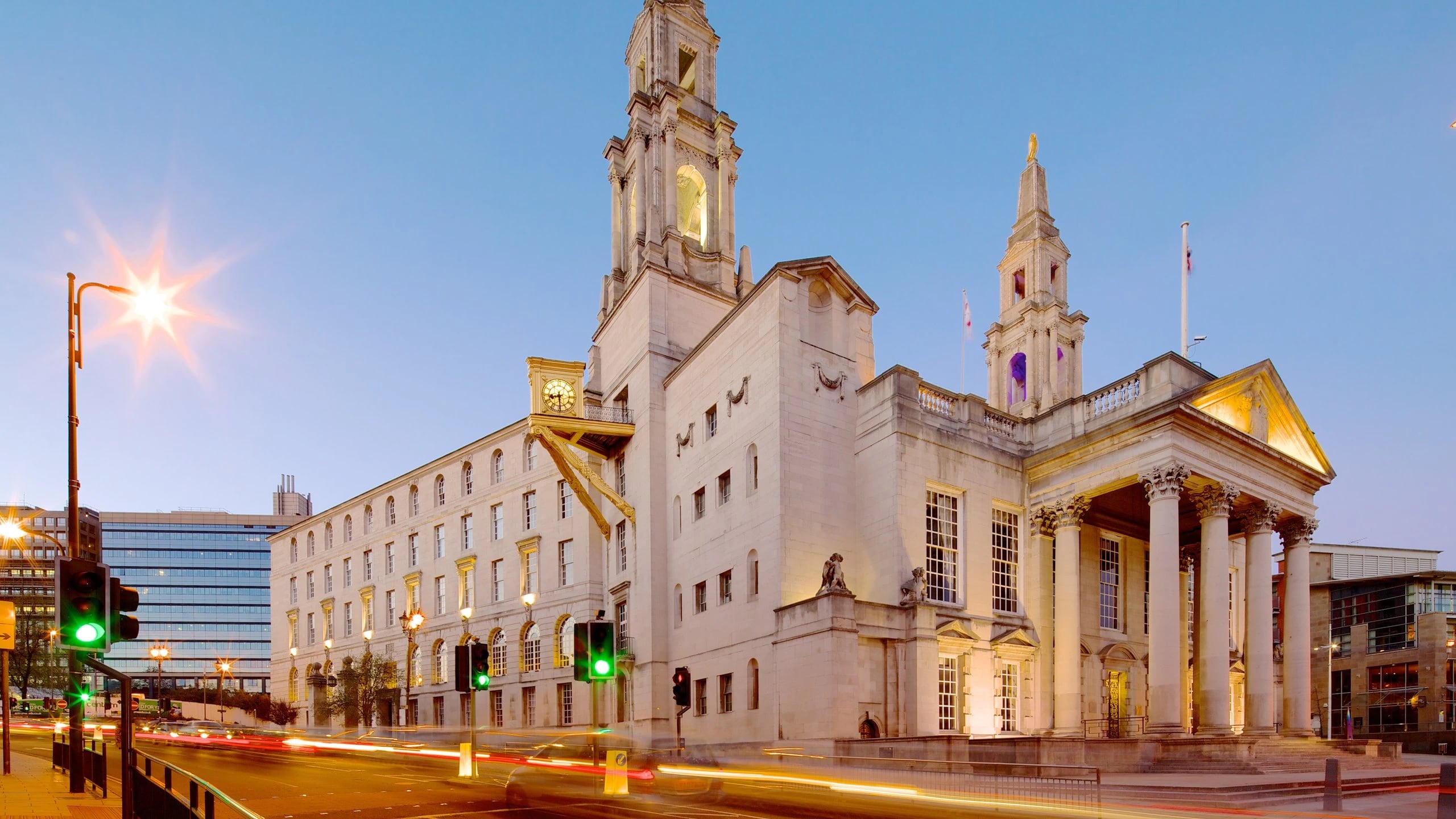
Leeds grew rich on wool long before it industrialised, and the evidence is still standing: the Corn Exchange (1864), the magnificent Victorian arcades of the city centre, the Town Hall with its columns and clock tower that look deliberately designed to suggest Leeds takes itself seriously — because it always has. The arrival of the railway transformed the city from a regional cloth centre into a national distribution hub, and the money that followed left a remarkably handsome city behind.
Quarry Hill, begun in 1935, was one of the most ambitious public housing projects in Europe: nearly 3,000 flats on a single site, inspired by the famous Red Vienna housing blocks, built with the conviction that working-class people deserved well-designed homes. It was demolished in the 1970s — a complicated story of maintenance and politics — but the ambition behind it was real and remains instructive.
In 1973, Marks & Spencer — a Leeds company, founded by Michael Marks in a Leeds market stall in 1884 — installed one of the first in-store computerised stock management systems at a Leeds branch, a development that would transform how retail operates globally. In 1996, Harvey Nichols opened its first store outside London in Leeds, a decision that signalled the city had both the spending power and the appetite for fashion that London had previously claimed as its own. The Victoria Quarter's gilded arcades made Leeds a destination for retail in a way that surprised people who hadn't been paying attention.
Leeds General Infirmary has been a centre of medical innovation since the nineteenth century, and the Leeds Teaching Hospitals Trust remains one of the largest NHS trusts in the country. The medical school at the University of Leeds has produced research in cardiology, oncology, and epidemiology that has shaped clinical practice internationally. Leeds is not a city that makes a fuss about this; it simply keeps doing it.
Leeds has produced a remarkable amount of music for a city that rarely leads with it. The Leeds International Piano Competition, founded in 1963 by Fanny Waterman, is one of the most prestigious in the world, launching the careers of pianists including Radu Lupu and Murray Perahia. The city's contribution to post-punk and indie rock — Gang of Four, the Mekons, Soft Cell, Kaiser Chiefs — reflects the same refusal to follow anyone else's template. Leeds Festival at Bramham Park has been a fixture of the British festival calendar since 1999.
The Henry Moore Institute, in the city centre, is dedicated to sculpture research and takes its place alongside the Leeds Art Gallery as part of a cultural offer that consistently punches above expectations.
Leeds is the largest city in England without a direct rail link to any other major English city — a fact its political class has been arguing about for years and which the promised HS2 northern leg was meant to address. That argument continues. Meanwhile, Leeds gets on with being the UK's third-largest financial centre, a major legal hub, and a city whose graduate population keeps growing because people who move here tend to stay. The universities, the hospitals, the law firms, and the digital businesses share a city that remains, fundamentally, one that does more than it says. That is both its strength and its underrated quality.
Photo by Benjamin Elliott on Unsplash