Feel free to email the Harrogate office anytime.
We're happy to help with any queries you have.
Harrogate has been in the business of restoration for four hundred years. It began with the springs — sulphurous, iron-rich waters that Victorian and Edwardian visitors drank and bathed in by the thousands — and it has never really stopped. The instinct to take care, to provide comfort at a high standard, to create spaces where people recover and rest, runs through Harrogate's history in a way that is both its commercial logic and its genuine character. Few towns of its size carry as many layers of consequence.
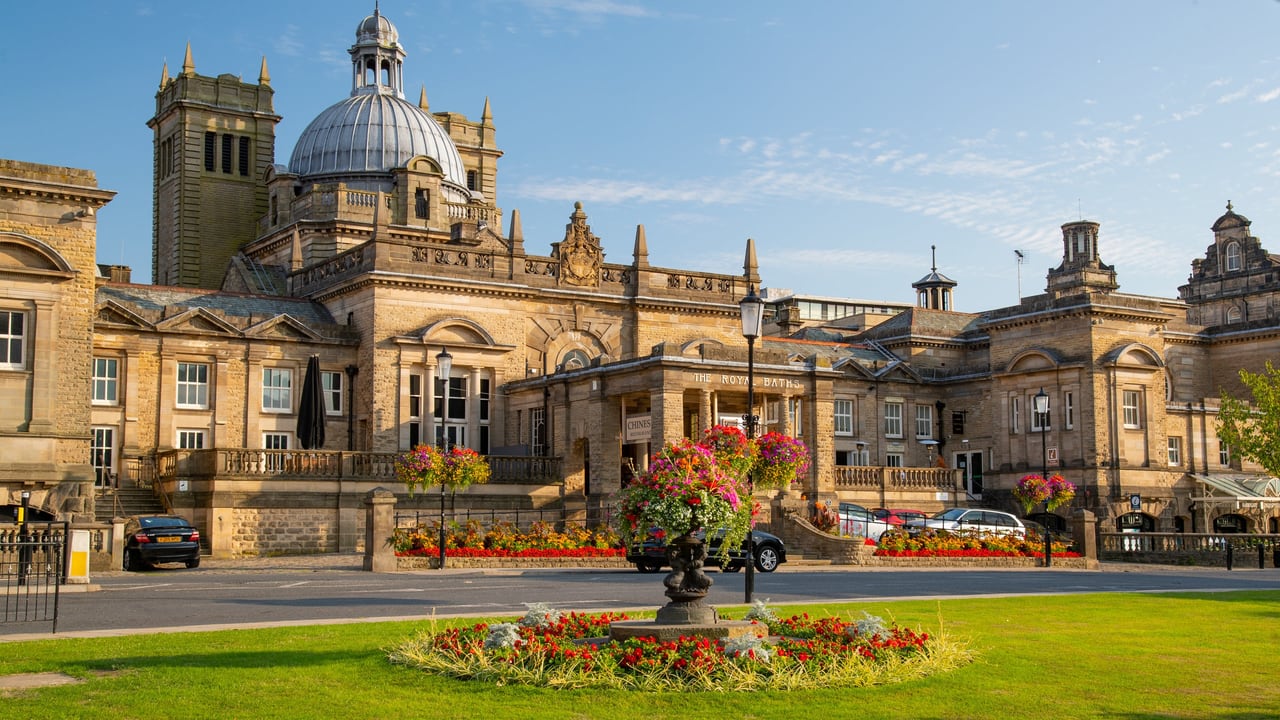
In 1571, a man named William Slingsby discovered mineral springs at what is now High Harrogate, and recognised that the water tasted remarkably like the spa waters he had encountered in the Low Countries. By the seventeenth century, Harrogate's reputation as a healing resort was established; by the Victorian era, it was one of the most fashionable spa towns in Britain. The Royal Pump Room, opened in 1842, dispensed the waters to paying visitors who submitted themselves to prescribed doses of what was, frankly, terrible-tasting sulphur water on the grounds that it was doing them good. The Turkish Baths, opened in 1897 and still operating today, offered a rather more pleasant experience: a sequence of hot and cold rooms of Moorish-influenced design that remain among the finest Victorian bath-house interiors in the country.
In 1914, Harrogate's hotels, hydros, and boarding houses were requisitioned for a purpose the spa visitors could never have anticipated. By 1918, the town had become one of the largest convalescent centres in Britain, housing thousands of wounded soldiers in buildings that had been designed for leisure but were now used for recovery. The Grand Hotel, the Majestic, and dozens of smaller establishments became wards, operating theatres, and rehabilitation spaces. The town adapted with characteristic efficiency. The scale of that wartime role — tens of thousands of men treated in a town of around 30,000 permanent residents — left traces in local memory that outlasted the buildings' return to hotel use.
In December 1926, Agatha Christie disappeared from her home in Sunningdale, Berkshire. Eleven days later, she was found at the Swan Hydropathic Hotel in Harrogate — now the Old Swan Hotel — registered under a false name and apparently unaware of the nationwide search for her. What happened during those eleven days remains one of the most examined mysteries in British literary biography. Christie herself never explained it. The episode has made Harrogate a recurring location in discussions of one of the most read authors in history; the Old Swan has been trading on the connection, with quiet pride, ever since.
Betty's Tea Room on Parliament Street is not simply a café. It is a Harrogate institution with a history as specific and improbable as any in the town. Founded in 1919 by a Swiss confectioner named Frederick Belmont, who apparently arrived in England knowing no English and boarded the wrong train, ending up in Yorkshire rather than London, Betty's became a tea room of genuine quality — famous for its fat rascals, its Swiss-influenced patisserie, and its refusal to change faster than it needs to. The queue outside on a Saturday morning is a Harrogate constant.
Since the opening of the Harrogate International Centre in 1982, the town has operated as one of Britain's principal conference and exhibition destinations. Its location, combined with its hotel stock and its general pleasantness, makes it a natural choice for national trade shows, political party conferences, and professional gatherings of every description. The Great Yorkshire Show — held annually at the showground since 1953 — is the largest agricultural show in Britain, drawing 130,000 visitors over three days. Harrogate's economy has long been built on the willingness to host well.
RHS Garden Harlow Carr, acquired by the Royal Horticultural Society in 2001, sits on 58 acres of valley garden on the edge of the town. It is a serious horticultural institution — research garden, trials ground, education centre, and ornamental garden combined — and one of the RHS's four national gardens. The Harrogate Flower Shows, held in spring and autumn in the Valley Gardens, have been attracting gardeners and competitors for decades, and continue to draw crowds that make the town's population briefly quadruple.
Harrogate is a town that does things properly. Not showily — the style here is understatement with high production values — but with a consistent seriousness about quality that reflects four centuries of knowing that the people who come here have expectations, and that meeting them is the whole point.
Photo by TBD