consultancy • design • implementation • support

Knowing isn't the problem.

Every manager already knows they should give feedback, delegate, and have the difficult conversation. Almost none of them reliably do it.

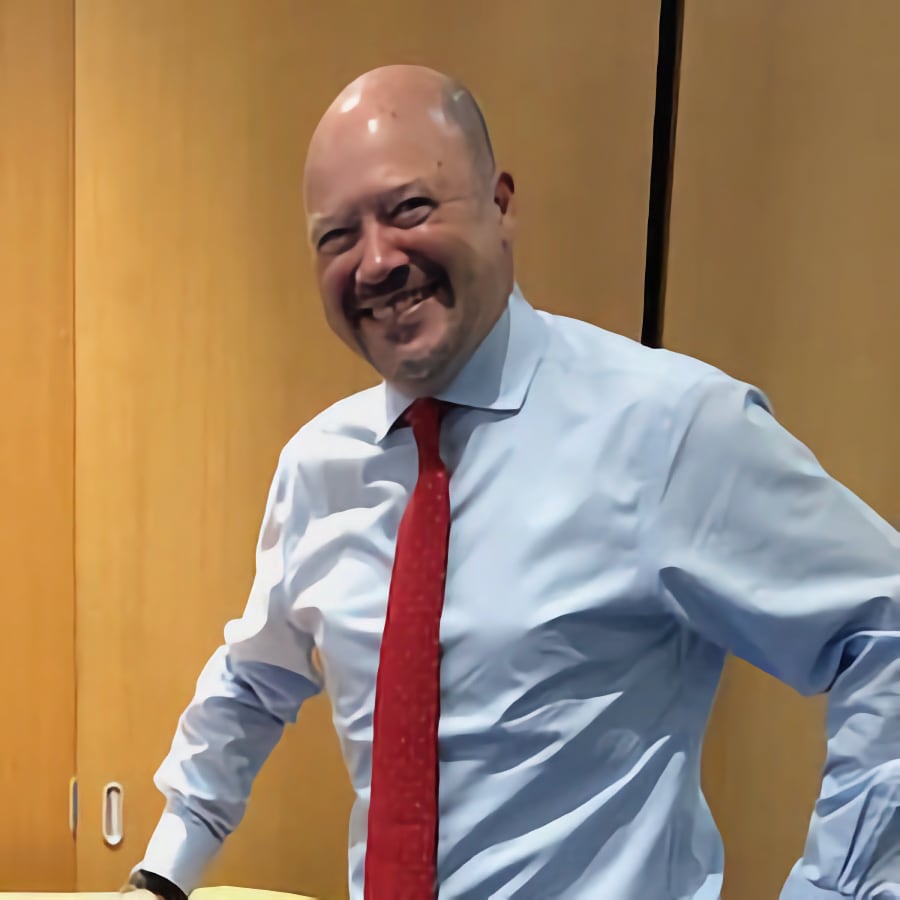
David Sollitt
I didn’t need a course to teach me the right things. I needed a course to help me actually do the right things. David Sollitt, Chief Operating Officer, Irwin Mitchell

That gap — between knowing the right thing and actually doing it under pressure — is the only thing worth buying leadership development to close. Everything below is built for that and nothing else.

Most training does not get results.

We don't have to tell you that. You've seen it yourself, and you've probably sat through it yourself. The enthusiasm lasts a fortnight. Then everyone goes back to how they were.

In our experience it fails in one of two ways, and usually both at once.

Too academic

Knowledge gets transferred and behaviour doesn't move. People leave able to describe a model they will never use. Understanding a thing and being able to do it are not the same skill, and only one of them shows up in your business.

Too short

A day, or two days, with no structure around it. That leaves no room for the feedback loop that learning actually requires — try it for real, get it wrong, be corrected, try it again. Without that loop there is no learning, however good the day was.

In theory, theory and practice are the same. In practice, they're not.

We live in the smartphone age. The whole of human knowledge is seconds away, free, at all times. And we still face the same obstacles with each other that we have faced for thousands of years.

That should tell you something about what a shortage of information is worth as an explanation. Nobody's leadership is failing because the information wasn't available. So we don't treat a shortage of information as the problem to solve.

How to spot it before you've paid for it

If you're evaluating providers, these are the things we'd look at first. None of them is proof on its own, but together they tell you what a programme is really optimising for.

To be fair about it: if an academic qualification is genuinely what you want, all of that is exactly right and you should buy it. Those programmes are good at what they set out to do. Just don't expect a qualification to change how somebody leads on Monday morning, because that was never what it was measuring.

Abi Broadley
We've done ILM leadership training before. It was very theory based, the tutor knew the content of the course but wasn't particularly inspiring, in fact it was quite boring. There was loads of theory, we had to write a lot of essays, it was a massive amount of work and very few results. We learnt theories and models about leadership and management, which was good, but didn't really get any practical ways of solving the real problems that we were facing day-to-day. We came out with a certificate, which really didn't mean anything. Abi Broadley, Managing Director, Aquarius

You may know the ingredients, but a recipe is useless without the method.

Most providers teach broadly the same content. Feedback, delegation, difficult conversations, motivation — none of it is secret, and none of it has changed much in fifty years. If content were the differentiator, every programme would work.

What separates development that changes behaviour from development that doesn't is never the ingredients. It's the method. These are the parts of ours, and they hold whether we're running an open cohort or working inside your organisation.

Philosophy

The programme is engineered to change behaviour, not to impart knowledge. Everything is judged against that. People are expected to take real action from the first session — not to leave with a plan to start once things quieten down, because things never quieten down.

Content

Simple, and usable on the day you learn it. What you won't get is psychobabble, or ideas that may be theoretically true but are far too complex to apply in the real world of everyday business. Because of the 360° analysis and the individual coaching, what any one person actually works on ends up close to bespoke — everyone in the room is solving their own problem, not the syllabus's.

Structure

Sessions are spaced apart, deliberately, with real work in between. That spacing is not scheduling convenience — it is where the learning happens. A block of consecutive days is easier to buy and easier to attend, and it is the single most reliable way to guarantee nothing sticks.

Feedback

Plenty of companies claim a 360° assessment. What they usually have is a 180° — colleagues, reports, a manager. Everyone who sees the professional performance and nobody who sees the person giving it. Ours takes feedback from the important people at work and at home, because the habits are the same habits in both places. It is an uncomfortable document to be handed, and it is the fastest way we know to show someone the gap between who they think they are and who others experience.

Accountability

Most training teaches people something and then trusts them to go and change on their own. It's the age-old problem: join a gym and see no results, hire a personal trainer and the results mysteriously appear. Habits are hard to build alone. Between sessions people go and use the skill for real, and then they come back and tell the room what they did and what happened. Nobody wants to stand up and say they didn't do anything.

Timing

There is a long gap before the final session, on purpose. Anyone can sustain a change for a fortnight while the training is still fresh and someone is watching. Coming back months later, once the room has gone cold and normal work has reasserted itself, is how you find out whether anything actually held. It is also the point at which most programmes have long since stopped looking.

The room

Participants tell us they learn nearly as much from the other people in the room as from our instructors. Keeping groups small and genuinely experienced is what makes that true — everyone is working on their own real problem, so the group becomes a deep well of experience, support and blunt advice. The camaraderie is not a side effect either; cohorts routinely keep meeting for years after the course has finished.

One-to-one coaching

The room gets everyone to the same place. The coaching is what makes it land differently for each person. Between sessions our instructors work one-to-one on whatever that individual is actually dealing with that week — so the agenda is set by their real situation rather than by a syllabus — and they are reachable in between for as long as it takes, by phone or in person. Individual time matters as much as group time, because it is where a coach can get at the specific thing holding one person back, which is rarely the thing holding back the person sitting next to them.

The instructors

Every one of our instructors has been through the programme themselves. They have each worked with thousands of people on their leadership. Firm but fair — none of them is afraid to challenge someone, and all of them stay respectful of how hard the job you're doing actually is. They walk the walk as well as talking the talk, which is harder to fake than a syllabus.

Richard Cowling
I went on a leadership training course three months ago and I can't remember any of it. Yet I still remember, and put into practice, the Quarterdeck course I did 20 years ago. Richard Cowling, Managing Director, Hellyar Plastics
We measure behaviour change and business outcome, not assessment completion.

Completion rates are easy to produce and easy to put on a slide. They are not evidence. A completion rate tells you somebody attended, which you already knew when you paid the invoice.

We'd rather be honest than impressive here: calculating ROI on this kind of work is notoriously difficult, and anyone who hands you a single confident number has decided what it needs to be. That difficulty doesn't stop us trying. The returns our clients report tend to be financial, from straightforward effectiveness; emotional, in less time lost to stress and smoother relationships; relational, in deeper connections with clients and colleagues; and motivational, in better control of attitude and a better effect on the people nearby.

What we can be firm about is the mechanism. You can't get the result by buying it, any more than you can get fit by buying a gym membership. Somebody has to do the work — which is why the method is built around making sure they actually do.

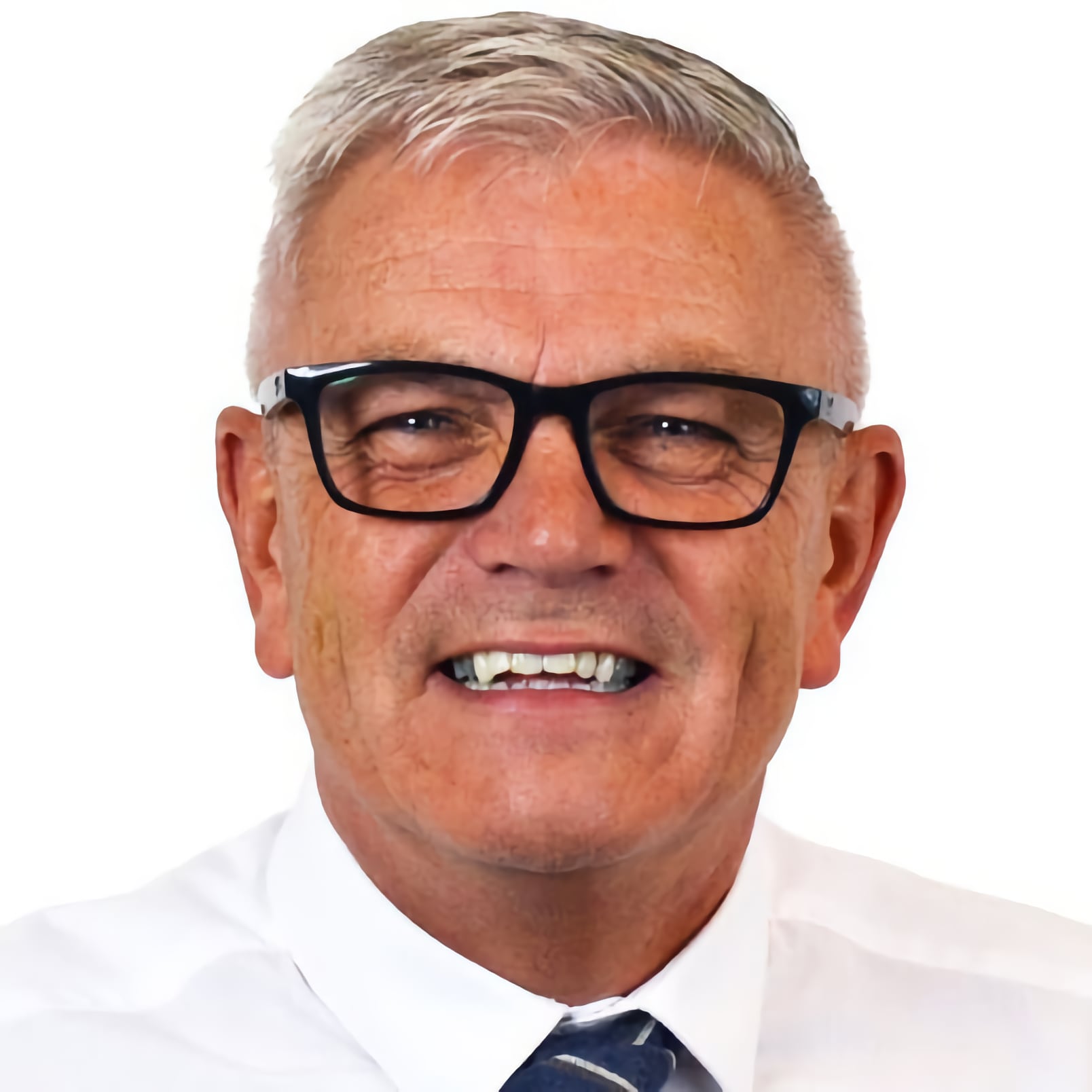
John Billson
The Quarterdeck leadership training programme has provided more value to us than the £40,000 Harvard Leadership Programme that we did previously. It's simply fantastic. John Billson, Managing Director, Beijer Ref

Who it's for. Not everyone.

We don't want to work with everyone. We only want to work with organisations that are serious about development — where somebody genuinely intends for things to be different afterwards, and is prepared for that to be uncomfortable.

If what you need is a box ticked, a budget spent, or a day out that everybody enjoys, there are providers who will do that well and cheerfully take the money. We're not a good use of yours.

If you're a forward-thinking organisation that wants your managers behaving differently, and you can tell us specifically what you want to be true in a year's time, we'll get on well.

The same applies to how we sell. We don't pitch. Our seminar is free, we fund it ourselves, and there is no sales element in the room — we'd rather show you what we can do and let you decide. Tell us what you're trying to change and we'll tell you honestly whether we can help, including when the answer is no.

Where the method shows up.

In-house work is the same method, built around what your own 360° data says your managers actually need, at group sizes and a schedule that fit how your organisation really operates, with 1-to-1 coaching running throughout.

The Inspirational Leadership Programme applies it at a fixed shape for individuals and small groups, and the free Leadership Seminar is a half day where you can see the approach first-hand before committing to anything at all.

The full range of shapes the work can take — from a written management standard through to certifying your own people to deliver it — is set out in programmes.

Trusted by great companies.

Santander Addleshaw Goddard Asda Ybs York Minster Nhs Lewis Silkin Bbc Knight Frank Shoosmiths Eversheds Sutherland Thomson Reuters Saffrey Hunters Dwp Itv Sainsburys Hilton Arla Foods Funding Circle Manchester City Savills Cabinet Office
Specsavers Brewin Portakabin University Of York Mastercard Evri Knights Hyatt Foot Asylum Mitie Arup Investec Fortus Co Op Pib Group Dhl Transunion Fred Olsen Nespresso Channel 4 Moodys Ey
Smith Nephew Mod Kingspan Brabners Sage Xero Nissan Skipton Building Society Aviva Jp Morgan University Of Sheffield Lk Bennett G4S Sagars Yorkshire Tea Hsbc Accenture Handelsbanken Dla Piper Lner Leading Hotels Of The World Pearson

Request a callback

Tell us where to reach you and we'll come back to you within one working day. No pitch — just a conversation about what you're trying to change.

Or email hello@quarterdeck.co.uk

Please email hello@quarterdeck.co.uk and we'll pick it up from there.

Thank you — we've got it.

We'll call you within one working day. If it's urgent, email hello@quarterdeck.co.uk.

Or email us →