Feel free to email the Hull office anytime.
We're happy to help with any queries you have.
Ask someone to name Britain's great cities and Hull might not be the first name that springs to mind. Perhaps that's because Hull — or to give it its full, magnificent title, Kingston upon Hull — has always been too busy actually doing things to spend much time shouting about it. This is a city that helped abolish slavery, pioneered aviation, and became the country's City of Culture, all while the rest of the nation was looking the other way. Hull, it turns out, has been quietly extraordinary for centuries.
Hull's story begins, as so many great stories do, at the water's edge. The River Humber is one of England's greatest estuaries, and Hull grew up on its northern bank as a trading port of real significance. By the medieval period it was already one of England's busiest harbours; by the 19th century it was a major hub for fishing, trade, and industry that connected Britain to the Baltic, to Scandinavia, and beyond.
The fishing industry was the city's lifeblood for generations — trawlers heading out to the distant waters of Iceland and the North Atlantic in conditions that demanded extraordinary courage. The Hull trawlermen were, and are, a symbol of working-class grit that the city celebrates with genuine pride. The sea shaped Hull, and Hull shaped those who worked it.
Here's a question: who is the most important person ever born in Hull? The answer, with very little competition, is William Wilberforce. Born on the High Street in 1759, Wilberforce became the parliamentary leader of the movement to abolish the transatlantic slave trade — and after two decades of relentless campaigning, he succeeded. The Slave Trade Act of 1807 was the result, setting in motion a chain of events that ended one of the great moral atrocities of human history.
Wilberforce is proof that one person, committed enough and principled enough, can genuinely change the world. Hull gave him to us, and the world is immeasurably better for it. The Wilberforce House Museum on the High Street is worth every minute of your time — and it's free, which feels very Hull.
Hull's intellectual life has never been confined to the obvious. Philip Larkin — one of the defining English poets of the 20th century — spent the last three decades of his life as a librarian at the University of Hull, and the city seeped into his work. His poem Here is essentially a love letter to Hull and the vast, flat Holderness landscape beyond it. There's something about Hull — its position at the edge of things, its facing outward to the sea — that appealed to Larkin's particular brand of wary, beautiful attention.
The city's connection to literature has only grown since Larkin's day. Hull's independent bookshops and literary culture remain a genuine point of pride, and the Philip Larkin Society keeps his legacy very much alive. Not every city can claim a world-class poet as one of its most loyal residents.
Hull also gave the world Amy Johnson, the pioneering aviator who in 1930 became the first woman to fly solo from England to Australia. She was 26 years old. In a biplane. To Australia. The sheer audacity of it is breathtaking even now.
Johnson was a Hull girl who looked at a sky full of impossibility and decided she'd fly through it anyway. Her achievement inspired a generation and demonstrated that courage and determination were not — and never had been — the exclusive property of any gender. Hull knew that before the rest of the country caught up.
In 2017, Hull became the UK City of Culture — and used the title to announce itself to a wider world that perhaps hadn't been paying sufficient attention. The year-long programme of arts, events, and cultural activity transformed public spaces, attracted international artists, and gave residents a renewed sense of pride in what their city could be.
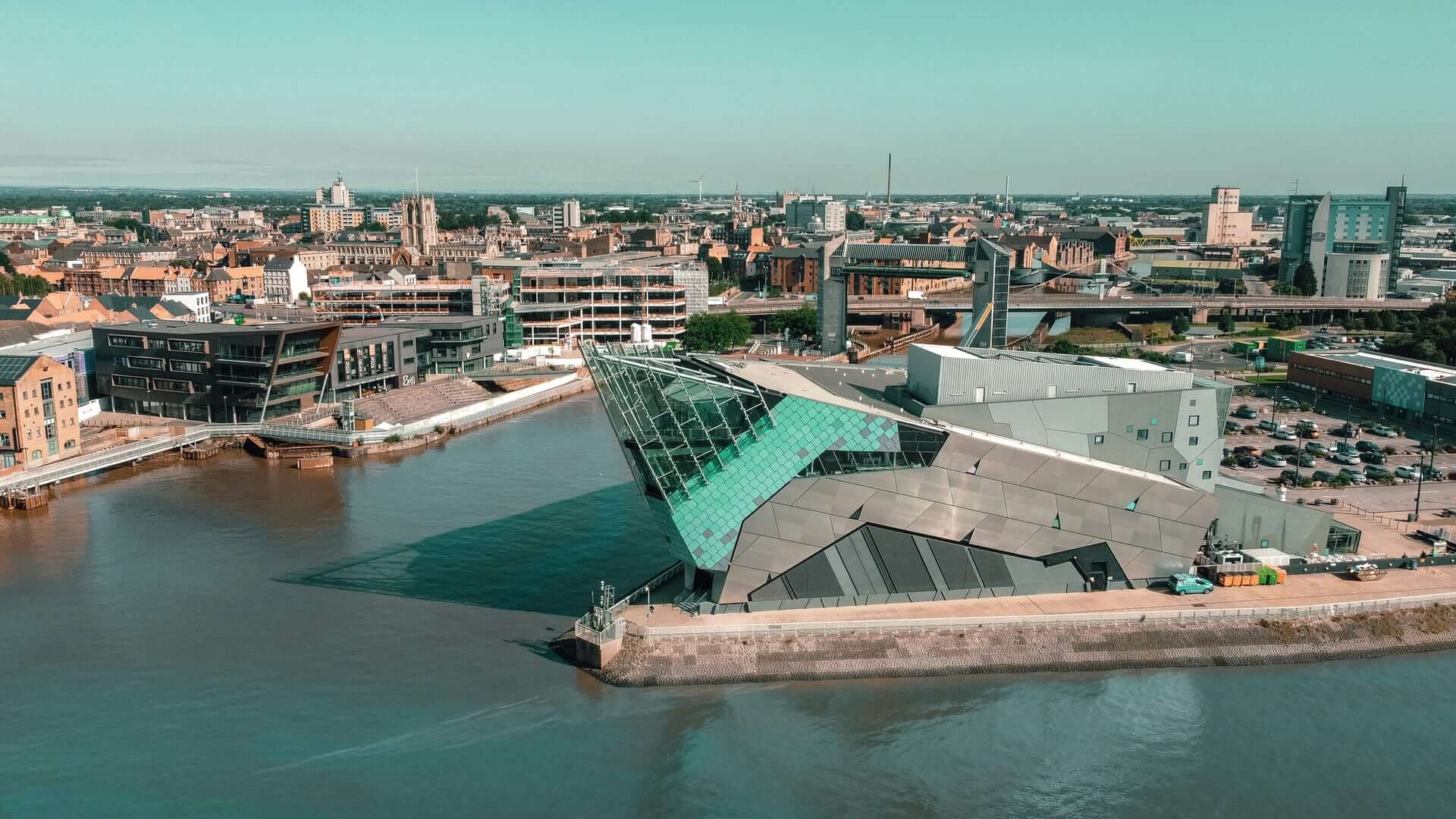
The Deep — Hull's extraordinary aquarium, jutting into the Humber like a great submarine — has been drawing visitors since 2002 and remains one of the most architecturally dramatic buildings in the north of England. Hull's Old Town, with its cobbled streets and historic buildings, tells the story of a medieval port that grew into a modern city without losing its sense of identity.
Hull looks east — over the Humber, across the North Sea — with the confidence of a city that has always understood its place in a wider world. From Wilberforce's moral vision to Amy Johnson's solo flight to the trawlermen's courage in Arctic waters, this is a city that has never thought small, even when the rest of the world wasn't watching.
So here's to Hull: the city that changed the world quietly, heroically, and without making a fuss about it. Very Hull. Very magnificent.